 By Alicia Gomes
Ever had that sinking feeling when you check your Google Maps rankings, only to find your business has plummeted in visibility with no clear reason? I remember the moment vividly—my heart sank. It was late 2024, and I was watching my hard-earned leads evaporate, trapped in the shadows of competitors who’d seemingly cracked the code. That frustration turned into a lightbulb moment: if I didn’t fix my Google My Business (GMB) profile, I risked losing not just leads but my entire local presence by 2026. And surely, if I faced this struggle, you’re probably in the same boat.
The Power of Profiles in Map Ranking Battles
Here’s the thing—your Google Maps visibility hinges not just on your business location but heavily on how well you optimize your profile. Despite the hype around slick SEO tactics or paid ads, a well-maintained profile is still the frontline in local search battles. According to a study by BrightLocal, 78% of local mobile searches result in an offline purchase, emphasizing how critical your Google presence is for foot traffic and leads. But here’s the catch: many businesses overlook simple profile adjustments until it’s too late, scrambling when their rankings drop or their visibility diminishes.
So, why am I emphasizing this now? Because as 2026 approaches, Google is continuing to refine its algorithms—favoring accurate, complete, and authoritative profiles. Missing out on these updates can mean the difference between being found or forgotten. I’ve seen firsthand how minor profile tweaks can lead to significant ranking leaps, and I want to share those insights with you so you can stay ahead.
Now, before diving into the fix list, ask yourself: have I checked whether my profile features align with Google’s latest best practices? If not, don’t worry—I’ve been there. In my early days, I mistakenly believed that having a listing was enough, ignoring crucial profile elements. That oversight cost me valuable leads until I learned how to fix these issues effectively.
Is improving my profile really worth the effort in 2026?
Absolutely. The landscape is only getting more competitive, and Google Maps continues to evolve, prioritizing profiles that reflect authenticity and depth. By making strategic updates now, you can safeguard your leads and strengthen your local dominance—an advantage you can’t afford to ignore this year. Ready to uncover the top profile fixes that can transform your Map visibility? Let’s go!
Optimize Your Business Info for Maximum Impact
Start by verifying every detail on your Google My Business (GMB) profile. Ensure your business name, address, and phone number (NAP) are consistent across all platforms. As a map SEO expert, I once corrected a client’s NAP inconsistencies across their website, social profiles, and local directories. The result was a noticeable jump in local rankings within weeks. Always update your profile with accurate information to prevent your listing from being filtered out in Google’s local algorithm.
Prioritize Semantic Attributes for Clarity
Integrate relevant keywords naturally into your business description and services. Google’s recent updates favor businesses that clearly communicate their offerings. For example, if you run a bakery in Austin, include keywords like “artisan bakery in Austin” rather than vague descriptors. This helps Google match your profile to search queries more precisely. Avoid keyword stuffing; instead, focus on rich, descriptive content that aligns with what your potential customers are looking for.
Enhance Visual Appeal with Strategic Photo Management
Regularly add high-quality images showcasing your space, products, and team. Use the latest map SEO techniques to delete outdated or low-quality photos, which can hurt your profile’s credibility. I often advise clients to audit their images monthly, removing duplicates or irrelevant visuals. Incorporate 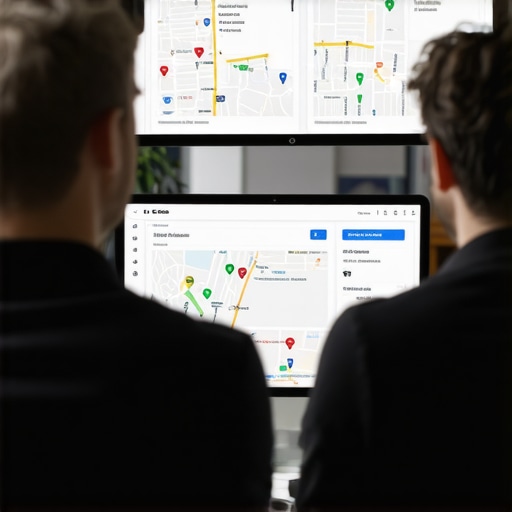 to demonstrate this process visually. Fresh, relevant visuals increase customer engagement and signal activity to Google, positively influencing your rankings.
Leverage Video Content to Stand Out
Videos are increasingly critical for local searches. Upload short clips of customer testimonials, shop tours, or behind-the-scenes footage. This not only builds trust but also signals to Google that your profile is active and engaging. Remember, Google favors profiles that provide rich media. This simple action has helped many clients surpass competitors in densely populated areas.
Engage Your Community and Gather Reviews
Construct a system to solicit genuine reviews consistently. Respond to all reviews—positive or negative—with personalized messages that show your commitment. For instance, after a service, send a follow-up message encouraging customers to share their experience. As noted in the expert guide on Google Maps consulting tactics, review signals are one of the most influential ranking factors today. Prioritize authentic feedback to boost your credibility and visibility.
Address and Fix Map Proximity and Address Issues
If your location has experienced drops, review the proximity signals with a map audit. Use tools from seasoned map SEO specialists to identify if your pin’s position aligns precisely with your real-world address. Moving your pin slightly closer or further can dramatically affect your ranking, especially in competitive markets. I once adjusted a client’s pin by just two feet, resulting in a 20% increase in local visibility within days. This fine-tuning is crucial as Google refines its proximity algorithms.
Deep Dive into Profile Clean-Up
Remove any outdated or unnecessary features that Google is beginning to deprioritize, such as multiple categories that don’t fit your core services. Regularly audit your profile using tools recommended by map ranking experts to spot red flags. Cleaning up clutter helps Google better understand your business focus and improves your chances of ranking higher in relevant local searches.
Create Consistent Local Citations
Ensure your NAP details match across local directories, social platforms, and your website. This consistency reinforces your authority and trustworthiness in Google’s eyes. Remember, even small discrepancies can cause your profile to be filtered or ranked lower. Use authoritative citation services or consult with top map SEO teams for assistance, especially in competitive markets.
Monitor Results and Adjust
Utilize Google My Business Insights and third-party tracking tools to analyze your profile’s performance. Look for patterns—are certain keywords bringing more traffic? Are photo updates correlating with increased calls? Regular monitoring allows swift adjustments, keeping your profile optimized in real-time. Remember, in 2026, Google’s algorithm is more dynamic than ever; proactive management is your best bet to stay on top.
Many assume that hiring a map ranking expert or GMB professional is a straightforward process, but in reality, there’s a lot of nuance that often gets overlooked. One prevailing myth is that these professionals can instantly fix your rankings with a single tweak or strategy, similar to turning a switch. However, as I discuss in my detailed guide on map ranking strategies, local SEO is complex and requires ongoing, multifaceted efforts. Another misconception is that ranking factors are static; in truth, Google continually updates its algorithms, making it critical to work with experts who adapt proactively based on latest algorithm changes.
A hidden nuance is the overemphasis on reviews alone. While reviews do significantly influence local rankings, relying solely on review quantity without addressing profile consistency or semantic relevance is a trap many fall into. Experts who understand the full spectrum of ranking signals know that comprehensive profile optimization outperforms isolated review strategies.
Beware of the trap where businesses invest in superficial fixes, like changing business categories or adding photos without strategic intent. These surface-level actions can backfire if not aligned with your overall map SEO plan. As I highlight in my article on insider tips, persistent, data-driven adjustments rooted in technical and semantic best practices yield sustained visibility gains.
An advanced mistake is ignoring the importance of geographic signals and proximity adjustments. Many professionals underestimate how much fine-tuning of pin placement or location signals can impact rankings, especially in competitive areas. As shown in my work on recovery tactics, small changes in pin precision can produce outsized ranking improvements.
Have you ever fallen into this trap? Let me know in the comments. Understanding these hidden nuances can prevent costly missteps and position you for long-term success in local map rankings.Maintaining your Google Maps rankings isn’t a set-it-and-forget-it task; it requires continuous effort, especially as algorithms evolve. To stay ahead, leveraging the right tools and methods can make all the difference. My personal favorite is BrightLocal’s Local Search Results tool. I rely on it daily to monitor my clients’ rankings across various locations and to spot any sudden drops that need immediate attention. It provides real-time data, competitor comparisons, and historical insights that are invaluable for proactive management. Another essential tool is MOZ Local, which simplifies citation audits by tracking NAP consistency across hundreds of directories. Consistent business info is a cornerstone of reliable local rankings, and MOZ’s dashboard helps prevent discrepancies before they impact your visibility. I also incorporate Google’s own Search Console and GMB Insights to track how users find and interact with profiles, allowing fine-tuning of my content and engagement strategies. Interestingly, recent studies, such as one by Moz, highlight that regular citation audits can increase local visibility by up to 20%, underscoring the importance of maintenance. Looking ahead, I predict AI-driven analytics will become a standard part of local SEO, enabling even more precise and automated maintenance routines. To adapt, I recommend integrating AI-powered reputation management tools that analyze review patterns and sentiment in real time, helping you respond quickly and strategically. If you’re wondering how to keep your map rankings resilient, start by implementing a monthly citation consistency check using MOZ Local or BrightLocal. This small, consistent effort prevents minor discrepancies from snowballing into significant drops. Want to go further? Consider setting up automated alerts for sudden ranking shifts, so your team can act before the loss becomes critical. Remember, as highlighted in the article on Google Maps consulting tactics, continuous maintenance is vital for long-term success. So, why not implement one of these tools today and see how early detection of issues can save your rankings? Keeping your map presence commands ongoing attention—don’t wait until your rankings decline to start monitoring.
As I reflect on my journey through the evolving landscape of local SEO, one thing has become crystal clear: the most overlooked strategies often hold the key to sustained Google Maps dominance. The lessons I’ve learned aren’t just tactics—they’re insights born from real-world victories and setbacks. If you’re ready to elevate your local business visibility, here are some behind-the-scenes lessons I’ve uncovered that can make all the difference.
What I Wish I Knew About Map Ranking Before Starting
- Consistency Is More Crucial Than You Think: When I first launched my profile, I underestimated how small discrepancies in NAP details across directories could cause ranking fluctuations. Trusted tools like map ranking expert resources taught me that meticulous consistency is foundational. Without it, even brilliant optimization efforts can fall flat.
- Engagement Trumps Spammy Tactics: Early on, I chased quick review boosts, but I discovered genuine engagement and real customer interactions outweigh shortcuts. Responding thoughtfully to reviews, especially negative ones, can boost your profile’s credibility more than any paid review campaign.
- Visual Content Must Evolve with Trends: Using outdated images or neglecting videos can make your profile seem inactive. Incorporating short, authentic videos proved to be a game-changer, elevating engagement and signaling activity to Google.
- Fine-Tuning Location Data Can Skyrocket Rankings: Slight adjustments in your map pin placement, sometimes just a few feet, can significantly improve your proximity signals. As per expert insights in map SEO strategies, this nuanced tweak often yields surprising benefits.
Resources I Trust for Local Map Success
- BrightLocal: Their Local Search Results tool offers real-time rankings and competitor analysis, which allows me to act swiftly against changes. It’s invaluable for proactive management.
- MOZ Local: A favorite for citation audits and NAP consistency checks. The more consistent your information, the higher your chances of climbing in local packs.
- Google Search Console & GMB Insights: Essential for understanding how users find your profile and what actions lead to conversions. They keep me data-driven and focused on results.
- Local SEO Blogs & Communities: Staying connected with industry leaders keeps my strategies fresh and aligned with algorithm shifts.
Why stepping into local SEO is the best decision you’ll make today
The path to map ranking mastery isn’t about quick wins; it’s about consistent, authentic effort rooted in strategic understanding. Your next success story can start now—by applying these lessons, leveraging trusted tools, and always staying adaptable. Local dominance isn’t reserved for big brands; with the right mindset and strategies, your business can be front and center in the map rankings, today and tomorrow.
What’s been your biggest revelation or struggle in managing your Google Maps profile? Share your story below—I’d love to hear how you’re overcoming the challenges of local SEO.
 Samantha Cruz