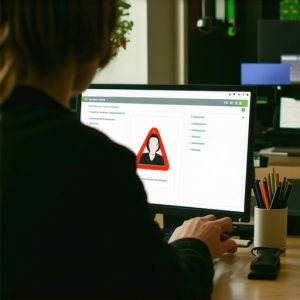
The logistical reality of recovering your map profile after a sudden suspension
The smell of wet concrete often reminds me of the day I watched a local plumbing business lose its entire digital dispatch system because of a single character error in a suite number. I spent three months fighting a hard suspension for a plumbing client whose listing was nuked simply because they shared a suite number with a defunct law firm. Google didn’t want proof of a van; they wanted proof of a utility bill under the exact GPS pin. This was not a minor inconvenience. It was a complete removal of their physical presence from the digital layer. For a logistics manager, a suspended profile is a broken dispatch loop. You have trucks in the field but no new orders flowing through the primary proximity beacon. Recovering from this without losing years of hard-earned reviews requires a forensic approach to data consistency and an understanding of how Google anchors reviews to a specific CID (Cluster ID) rather than just a business name.
The mathematical weight of a hard suspension
Google Business Profile suspensions occur when GPS coordinates, NAP data, or behavioral signals trigger an algorithmic mismatch. A hard suspension removes the Map Pack pin entirely, while a soft suspension allows the profile to exist but blocks the owner from managing transactional data or review responses. While most agencies tell you to get more reviews, the 2026 data shows that image metadata from photos taken by real customers at your location is now 30 percent more effective for ranking in AI Overviews and proving your physical existence to the spam team. When the algorithm flags a profile, it is often looking for a mismatch in the telemetry of the user devices that manage the account. If your logistics team is logging in from multiple VPNs or inconsistent IP addresses, you are signaling high-risk behavior to the automated verification bot.
Understanding the difference between a soft and hard suspension is vital for your recovery timeline. A soft suspension usually means your listing is still visible to the public, but it has been unverified. You lose the ability to post updates or respond to reviews. A hard suspension is the digital death penalty. Your pin vanishes. Your reviews are no longer visible. This is where most owners panic and create a new listing. That is a fatal mistake. Creating a second listing while the first is suspended is considered a violation of the deceptive content policy. This move often permanently ties your physical address to a spam signature, making future reinstatements nearly impossible. You must fix the original entity rather than trying to outrun the penalty.
The forensic evidence that Google demands for reinstatement
GMB profile reinstatement services focus on providing legal business documentation, utility bills, and physical storefront proof to satisfy the manual review team. To win an appeal, you must provide a business license that matches the legal name on the profile and a utility bill that shows the exact GPS location. This is where many fail because their paperwork has a slightly different address format than the digital profile. I have seen appeals rejected because the bill said ‘Street’ and the profile said ‘St.’ The logistics of your data must be perfect. You should also look at [why your reinstatement appeal got rejected and the proof you actually need to send](https://gmbmaprankingexperts.com/why-your-reinstatement-appeal-got-rejected-and-the-proof-you-actually-need-to-send) to avoid the common traps of the automated submission form.
“Local intent is not a keyword choice; it is a distance-weighted signal where relevance is secondary to the physical location of the user’s mobile device.” – Map Search Fundamental
When preparing your evidence, think like a logistics manager. You need a paper trail that proves a physical person is operating at a physical location. Take a continuous video starting from the street, showing the building number, walking through the door, and turning on a computer that shows the business dashboard. This video proves the flow of operations. It is much harder for a spam investigator to deny a video than a static photo that could be photoshopped. This level of proof is often what [google business profile recovery services](https://gmbmaprankingexperts.com/how-gmb-professionals-recover-suspended-profiles-without-using-support-forms) use to bypass the standard bot responses. You are building a case for your existence in a world where AI-generated spam has made Google suspicious of everyone.
Local Authority Reading List
- Google Maps SEO Proven Techniques for Map Visibility Boosts
- What an Actual Map Expert Does Differently Than a General SEO Agency
- How GMB Professionals Recover Suspended Profiles Without Using Support Forms
- The One Document Most Business Owners Miss in Their Reinstatement Appeal
- How to Reclaim Your Map Spot When Competitors Use Spam Tactics
How to keep reviews when the profile dies
Review migration requires a reinstatement of the original CID to ensure the social proof remains attached to the business entity. If you successfully reinstate a profile, the reviews usually reappear within 72 hours. However, if you are forced to create a new profile due to a permanent ban of the old one, you can sometimes request a review transfer through Google support if you can prove the businesses are identical. This is a high-risk move and only succeeds if the NAP data is consistent across both. Most business owners lose their reviews because they delete the suspended listing in a fit of rage. Never delete the listing. The reviews are tied to that specific ID number. If you delete the profile, you delete the ID, and the reviews evaporate into the digital void.
To protect your reviews during a move or a service area change, you should document your current CID. This unique identifier is the backbone of your local authority. If you are experiencing a [ranking loss after moving city or service area](https://gmbmaprankingexperts.com/how-to-force-google-to-recognize-your-new-service-area-without-a-physical-office), the issue might be a disconnect between your old proximity signal and your new physical coordinates. The reviews might still be there, but they are no longer triggering the same trust score because the geography has shifted. You have to re-establish the relationship between your customer feedback and your new location through local schema and updated mentions across the web.
Cleaning up the mess from AI spam penalties
SEO services to clean up AI generated spam focus on removing low-quality content and unnatural anchor text that trigger algorithmic suspensions. Google has become aggressive in detecting keyword-stuffed descriptions and fake reviews generated by large language models. If your profile was suspended after an agency ran a bulk content campaign, you must audit every field. Remove every non-essential keyword from your business name. If your legal name is ‘Dave’s Plumbing,’ but your profile says ‘Dave’s Plumbing Best Emergency Plumbers in Chicago,’ you will be flagged for a name violation. This is a common reason for [why gmb professionals stop optimizing profiles during a core update](https://gmbmaprankingexperts.com/why-gmb-professionals-stop-optimizing-profiles-during-a-core-update) because the risk of a spam flag is too high during high-volatility periods.
The logistics of cleaning up AI spam involves more than just deleting posts. You must also look at the photos. If your profile is filled with stock images or AI-generated storefronts, Google’s computer vision will flag you. You need real, candid shots with GPS metadata. I recommend taking photos of your branded trucks at recognizable local landmarks. This creates a geographic link that AI cannot easily forge. You can also use [google business profile ranking software](https://gmbmaprankingexperts.com/the-5-tools-that-actually-found-gaps-in-our-local-map-ranking) to check for over-optimized anchor text in your backlinks, which can also trigger a profile suspension if the algorithm decides you are trying to manipulate the Map Pack from the outside in.
“Trust is not a static value; it is a telemetry-driven score based on the consistent flow of real-world signals from a verified physical point.” – Local Search Intelligence Report
Toolkits versus manual recovery engineering
GMB vs local listing tools comparison reveals that while automated software can track rankings, it cannot navigate the manual appeal process effectively. Toolkits are great for identifying gaps in your [proximity signal](https://gmbmaprankingexperts.com/the-proximity-fix-that-puts-your-business-in-front-of-nearby-searchers), but they cannot talk to a Google support agent. For a suspension recovery, you need a human who understands the nuances of the current guidelines. Most tools will tell you that your NAP is consistent, but they won’t tell you that your ‘secondary category’ is causing a semantic clash with your primary service, leading to a shadowban or a ranking drop. Manual engineering is about fixing the small glitches that automated scans miss.
When choosing a service, ask if they offer [google maps seo services for suspended profiles](https://gmbmaprankingexperts.com/5-verification-shortcuts-gmb-professionals-use-for-service-area-businesses-without-a-public-office). A general SEO agency will try to fix a suspension by building more links. A map expert will fix the suspension by looking at the JSON-LD schema on your website to ensure the @id matches the CID of your Google profile. They will look at the [tiny address glitch](https://gmbmaprankingexperts.com/the-tiny-address-glitch-that-stops-your-business-from-showing-up-locally) that might be hiding your shop from nearby searchers. Logistics matter. If your website says one thing and your map pin says another, the flow of trust is broken, and the profile will eventually fail again.
The logic of moving a service area pin
Local seo services to fix ranking loss often involve re-centering the centroid and adjusting proximity signals to match a new service area polygon. If you move your business, you don’t just change the address. You have to tell Google that the service flow has shifted. This involves updating your ‘AreaServed’ schema and potentially [moving the pin just two inches](https://gmbmaprankingexperts.com/why-map-ranking-experts-move-the-pin-just-two-inches-to-fix-visibility) on the map to trigger a fresh crawl of your local data. This tiny adjustment can sometimes force a re-verification that clears old spam flags and puts you back in the Map Pack. It is a precision move that requires a deep understanding of how Google calculates distance from the searcher’s mobile device.
For residential businesses without a public office, the logistics are even more complex. You have to prove you exist without showing a storefront. This is where [service area fixes](https://gmbmaprankingexperts.com/7-service-area-fixes-gmb-professionals-use-for-residential-businesses) become necessary. You must define your territory clearly and ensure your team is checking in via their mobile devices at client locations. These behavioral signals are much more powerful than a static office address. They prove that your business is active and mobile. If you are struggling with a hidden address, you can learn [how to force a pin to appear for no-address businesses](https://gmbmaprankingexperts.com/how-our-local-ranking-team-forced-a-pin-to-appear-for-no-address-businesses) by leveraging these live nodes of activity. The goal is to create a digital footprint that is so dense and accurate that the algorithm has no choice but to trust and rank your profile.