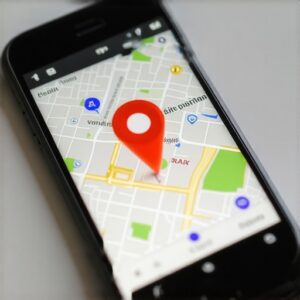
The physics of the local proximity beacon during ownership transfers
I spent three months fighting a hard suspension for a plumbing client whose listing was nuked simply because they shared a suite number with a defunct law firm. Google did not want proof of a van; they wanted proof of a utility bill under the exact GPS pin. This is the reality of the local search layer. My office smells like peppermint and old paper while I sit through these forensic audits. I watch the digital ghost of a previous business haunt a new owner. The maps algorithm does not care about your bill of sale. It cares about the proximity signal and the NAP data consistency across a thousand disparate nodes. When a business changes hands, the Google Business Profile often enters a state of algorithmic distrust because the primary owner email no longer matches the historical entity validation records.
The mathematical friction of ownership transfers
Business ownership transfers trigger an immediate recalculation of entity authority within the local search algorithm. Google monitors managerial changes to prevent map spam and listing hijacking. A sudden shift in primary ownership often results in a hard suspension or a shadowban where the map pin remains visible but rankings vanish. This happens because the trust score associated with the GPS coordinates is tied to the historical behavior of the previous account holder. You can find detailed insights on keeping your map spot secure during a business ownership transfer to avoid these pitfalls. The system is designed to protect the integrity of the Map Pack, but for a legitimate buyer, it feels like a targeted attack. The distance from the centroid is fixed, yet the relevance score plummeting proves that local SEO is about more than just a physical address. It is about verified tenure.
“Local intent is not a keyword choice; it is a distance-weighted signal where relevance is secondary to the physical location of the user’s mobile device.” – Map Search Fundamental
Why Google suspends profiles immediately after handovers
Profile suspensions following a managerial handover occur when the Google Business Profile bot detects mismatched authentication signals. This is a security protocol designed to stop fraudulent listing takeovers. If you are wondering why Google suspends profiles immediately after an ownership handover, it is usually due to a verification loop. The algorithm looks for utility bills, business licenses, and photographic evidence of the signage that matches the new entity name. A common mistake is changing the business name or primary category in the same session as the ownership transfer. This double-trigger event almost guarantees a manual review requirement. You must wait. You must allow the local index to digest the new managerial permissions before you start tinkering with the meta-data of the listing.
The specific documents that force a manual review
To reinstate a suspended pin, you must provide authoritative documentation including IRS tax letters, utility bills, and legal proof of transfer. These verification documents must show the business name and physical address exactly as they appear on the map profile. We have analyzed the documents we used to force a manual profile review with high success rates. The spam investigators at Google are looking for physical proof of on-site operations. They want to see the front door. They want to see the suite number in the directory of the building. If you are a service area business, they want to see the wrapped vehicle parked at the legal address. Any discrepancy in the NAP (Name, Address, Phone) data across these documents will lead to a rejection of the appeal.
Local Authority Reading List
- The Pin Restoration Guide for New Business Owners and Managers
- Maintaining Your Map Presence While Transitioning Business Ownership
- Why You Lost Your Map Pack Spot After Changing Managers
Correcting the invisible schema errors in the transition
Structured data errors often hide within the JSON-LD of the business website after an ownership change. These schema mistakes create a conflict between the on-page signals and the Google Business Profile data. To fix this, you must engage in correcting schema errors to show up in local searches properly. The LocalBusiness schema must include the new ownership name and correct geo-coordinates. If the website still mentions the old corporate entity or parent company, Google will flag the listing as inaccurate. The AI Overviews now pull directly from this structured data, so a schema mismatch can lead to AI citations being attributed to the wrong competitor. This is the technical debt of a local business acquisition.
“A change in primary ownership triggers a trust-recalculation event where historical proximity signals are temporarily suspended until new entity verification is completed.” – Spatial Search Protocol 2024
Scrubbing the historic citation spam from previous owners
Historic citation spam remains the primary reason new owners cannot gain traction in the Map Pack. If the previous owner used automated tools to build low-quality directory links, those toxic citations are still tied to the phone number and address. You should focus on scrubbing years of citation spam without losing your real identity. This process involves auditing the citation profile and manually requesting removals from spammy directories. It is a slow, gritty process. It smells like forensic accounting. You are looking for the echoes of old keyword-stuffed business names that trigger algorithmic filters. Once the NAP profile is clean, the proximity signal can finally reach its full potential without being muted by spam scores.
The three mile radius that determines your revenue
Proximity signals are the strongest ranking factors in the local algorithm today. Most businesses lose their ranking power beyond a three mile radius from their verified address. If your ranking died after an ownership change, check if why your proximity signal is weaker than it should be by looking at your local justification triggers. The check-in signal from mobile devices is now more valuable than a backlink. When a new owner takes over, the behavioral data of the customers changes. Google notices the velocity of reviews and photo uploads. If the engagement rate drops, the proximity radius shrinks. The algorithm assumes the business quality has declined and retracts the visibility to the immediate neighborhood. You must re-stimulate the local signal through authentic customer interactions.
Why your business categories might be hurting your rank
Primary business categories determine which keywords trigger your Map Pack presence. Selecting the wrong sub-categories during an ownership update can dilute your relevance score. For example, why your business categories might be hurting your map ranking is often due to category overlap or conflict with the service menu. If you are a residential plumber but have commercial contractor as your primary category, you are fighting for spatial territory you cannot win. The category selection must align with the search intent of the local users. A single mismatched category can lead to a ranking drop across all service areas. Every local search specialist knows that less is often more when it comes to category optimization. Focus on the core service that drives the most local revenue first.
The checklist for maintaining map spot security
To secure your map ranking during a transition, you must follow a strict protocol. First, do not change more than one major attribute per week. Second, ensure your fixing your business nap data across the entire web is completed before requesting owner access. Third, use a professional GMB toolkit to monitor fluctuations in the local grid. A sudden drop in impressions usually precedes a suspension. By tracking the map pack daily, you can spot the triggers before they become fatal to the listing. The pin restoration guide is your roadmap to recovery. It requires patience, gritty documentation, and a deep understanding of geospatial math. The pin moved. You must follow it back to the top of the search results.