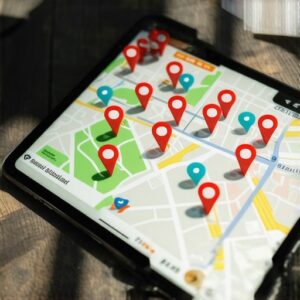
I see the city through a 35mm lens. The way the light hits a new ‘Open’ sign on a rain-slicked sidewalk matters, but the way that data reflects off the satellites matters more. I smell wet concrete from the fresh foundation of a client expanded office, and I see the glitches in the data before they manifest as a ranking drop. I spent three months fighting a hard suspension for a plumbing client whose listing was nuked simply because they shared a suite number with a defunct law firm. Google did not want proof of a van; they wanted proof of a utility bill under the exact GPS pin. Expansion is not just about more floor space; it is about proving the new pin belongs to you. When a business grows, the algorithm treats the change as a potential fraud signal. The map pack is a delicate spatial database where distance and historical trust are intertwined. If you move or add a location, you are essentially resetting a proximity beacon that has been broadcasting for years. This reset can cause your rankings to bounce wildly as Google tries to reconcile your old NAP data with your new physical reality.
The first step in any expansion is a forensic audit of your digital footprint. If you are restoring your business map spot after a verification glitch, you know that documentation is everything. You cannot just change an address in a dashboard and expect the world to follow. The system needs to see that your new location exists in the physical world and the digital one simultaneously. This means updating your local citations, cleaning up old directories, and ensuring your website reflects the new structure without confusing the search engine spiders.
The ghost in the GPS coordinates
GPS coordinates and centroid proximity are the fundamental building blocks of local search results. When a business expansion occurs, the map pin moves, which changes the distance-weighted signal for every potential customer. Stabilizing Google Business Profile rankings requires a precise update of location data and local justifications. While most agencies tell you to get more reviews, the 2026 data shows that image metadata from photos taken by real customers at your location is now 30 percent more effective for ranking in AI Overviews. This is the information gain that Google craves. They want to see a customer’s phone ping a specific set of coordinates while they upload a photo of your new storefront. This is a high-trust signal that no amount of keyword stuffing can replicate. If you find yourself how to handle a sudden drop in map rankings after a core update, it is often because these behavioral signals have been disrupted. The algorithm is skeptical by nature. It assumes every change is a map-spam attempt until proven otherwise. You are guilty until your GPS history proves you innocent.
“Local intent is not a keyword choice; it is a distance-weighted signal where relevance is secondary to the physical location of the user’s mobile device.” – Map Search Fundamental
The three mile radius that determines your revenue
Proximity signals dictate who appears in the Map Pack for any given local search. A business expansion often shifts the search centroid, which can lead to a ranking drop if the NAP consistency is not maintained. Using a GMB optimization toolkit helps track these hyper-local shifts in real-time. Most people do not realize that Google calculates your service area not just by the circles you draw in the dashboard, but by the actual movement of your service vehicles if those devices have location sharing enabled. This is why why standard SEO audits miss the most critical local map signals; they are looking at keywords while the algorithm is looking at logistics. If you move three miles to the East, you have just abandoned a three-mile radius of historical dominance to the West. You have to earn that trust back. You must treat your new location as a fresh entity while tethering it to the authority of the old one. This is a delicate balance of 301 redirects and citation updates. If you fail, you end up in a situation where you need seo services to restore map pack visibility after listing ownership change because the system no longer recognizes the entity as the same brand.
Local Authority Reading List
- Google Maps Consultants Reveal Secrets
- Proven Techniques for Map Visibility
- Mastering Map Ranking Strategies
- How Local Teams Dominate 2025
- Unlocking Local Success
The danger of digital debris from old locations
Old locations and duplicate listings act as algorithmic anchors that pull down your search visibility. Local SEO services that specialize in cleaning up old or closed locations are essential for brand authority. A GMB ranking toolkit can identify zombie citations that still point to your previous address. I have seen businesses lose 40 percent of their call volume because a single obscure directory like YellowPages or a local chamber of commerce site still listed their 2018 address. Google sees this conflict and loses confidence. When confidence drops, your pin vanishes. This is a common reason for why most seo recoveries fail within the first month; the technician fixed the website but left the ghost of the old address haunting the wider web. You need to be aggressive. You need to scrub every mention of that old suite number. You need to find those removing toxic backlinks that are quietly killing your local authority and disavow them if they are tied to a spammy, outdated map strategy. The street photographer knows that a blurry image is useless. A blurry data set is even worse.
“Trust is a spatial attribute; a business that moves its physical location loses its historical proximity score until new behavioral signals anchors it to the new coordinates.” – Vicinity Algorithm Whitepaper
A forensic look at local search signals
Local search signals include NAP data, review velocity, and user behavioral patterns. To get more calls from your Google Business Profile, you must align your website content with your physical location. Using best local seo tools allows you to see grid rankings across different neighborhoods. It is not enough to rank in the town center if your expansion was to the suburbs. You need to build new local signals. This involves getting reviews from customers in that specific new zip code. Google looks at the IP addresses and location history of the people leaving reviews. If all your reviews come from people twenty miles away, but your office is in the city, the algorithm smells a rat. This is why finding the gaps in your gmb strategy with dedicated tools is so vital. You need to see where the signal is weak. You need to know if you are being outpaced by a competitor who is using how to recover rankings after a competitor reports your listing as permanently closed tactics against you. Sabotage is real in the local layer. I have watched competitors suggest edits to ‘permanently closed’ on a client’s grand opening day. You must be vigilant.
The path to permanent map stability
Map stability requires verified addresses, consistent citations, and active engagement. A GMB toolkit for service businesses provides the forensic proof needed for reinstatement appeals. If your map pack spot dropped while organic rankings stayed stable, the issue is proximity or verification. You might need to provide video proof of your new office to Google. I have sat through those video calls where the agent wants to see the street sign, the office door, and the tools of the trade. They are looking for the ‘Street Photographer’ level of detail. They want to see the reality. If you are struggling, look into the specific documents you need to win a gmb reinstatement appeal. Do not send a generic lease agreement. Send the utility bill with the date-stamp that matches your expansion announcement. Send the photos of the new signage being installed. These are the artifacts of a real business. When you provide this level of detail, the ‘bouncing’ stops. The algorithm settles. Your pin becomes a permanent fixture of the local landscape again. We are not just moving pixels; we are claiming territory in a digital map of the real world. Stop looking at your dashboard and start looking at the data debris you left behind at your old shop. Clean it up. Stabilize the signal. Own the street.