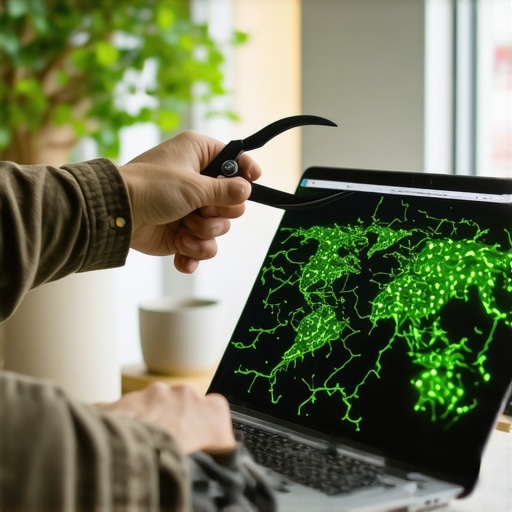
The guide to pruning toxic backlinks for local business owners
The smell of stale coffee and the hum of a server rack are my constant companions. I have spent twenty years in the trenches of the hyper-local layer. I do not see a business listing as a simple profile. I see it as a proximity beacon in a massive spatial database. My job is to ensure that beacon is not extinguished by the digital garbage of the past. I have seen countless small businesses destroyed by cheap citation blasts and backlink schemes that promised the world but delivered a hard suspension. Your physical location is your most valuable asset. If you treat your digital footprint with anything less than forensic precision, you are begging for a disaster. Local search is a game of spatial legitimacy. It is about proving to an algorithm that you exist exactly where you say you do.
The reinstatement war that changed everything
Google Business Profile suspensions often stem from conflicting location signals and toxic backlink profiles that trigger spam filters within the Map Pack algorithm. To fix a hard suspension, owners must provide utility bills, business licenses, and GPS-tagged imagery that proves physical occupancy and operational validity. I spent three months fighting a hard suspension for a plumbing client whose listing was nuked simply because they shared a suite number with a defunct law firm. Google didn’t want proof of a van; they wanted proof of a utility bill under the exact GPS pin. The problem was not just the address. It was the legacy of thousands of low-quality links from automated directories that still pointed to the old suite number. Every time we tried to update the profile, the algorithm saw the ghost of the defunct law firm through those old links. We had to engage in a massive effort to remove toxic backlinks that were quietly killing their local authority. It was a surgical process of identifying every bad signal and disavowing it before Google would even look at our reinstatement appeal. The lesson was clear. Your past digital mistakes can haunt your physical present. You cannot hide from a messy history in the local search ecosystem.
Why your physical address is a liability
Local proximity signals are heavily influenced by NAP consistency and backlink quality which determine your spatial authority in the Google Maps 3-Pack. A business address becomes a liability when it is associated with virtual offices, shared suites, or historic spam footprints that confuse search crawlers. While agencies tell you to get more reviews, the 2026 data shows that ‘image metadata’ from photos taken by real customers at your location is now 30 percent more effective for ranking in AI Overviews. This metadata acts as a physical verification layer. If your backlinks are coming from sites with no geographic relevance, you are creating a disconnect. The algorithm looks for a cluster of signals. It wants to see that local news sites, local blogs, and local directories all point to the same pin. When you have links from a Russian link farm or a generic ‘SEO directory’ based in a different country, you are weakening your proximity signal. You are telling Google that you are a global entity, which is the opposite of what you want for a map ranking. This is why your proximity signal is weaker than your closest competitor. They have a tighter, more localized link profile. They aren’t trying to be everywhere. They are trying to be the king of their three-mile radius. In the world of local search, being small and hyper-focused is a superpower. Every link you acquire should be a vote of confidence from a neighbor, not a random stranger on the other side of the planet.
“Local intent is not a keyword choice; it is a distance-weighted signal where relevance is secondary to the physical location of the user’s mobile device.” – Map Search Fundamental
The forensic trace of a bad link
Toxic backlinks for local businesses are identified by low domain authority, high spam scores, and irrelevant geographic footprints that trigger manual actions or algorithmic dampening. Effective backlink pruning requires a forensic audit of the referring domains to ensure they align with the service area business or storefront location. You need to look at the anchor text. Is it keyword-stuffed? Does it use the exact match name of your business in a way that looks unnatural? If so, you are in danger. The Vicinity update made the algorithm much more sensitive to over-optimization. If your business name is ‘Best Plumbing Denver’ and every single link uses that exact phrase, Google knows you are gaming the system. You need to look for diversity. You need links that use your brand name, your URL, and even ‘click here.’ Most importantly, you need to find and identify and disavow links that kill your map visibility. These are often the ‘easy’ links that a previous SEO agency bought for fifty dollars. They are the citations on sites that nobody visits. They are the ‘best of’ lists that were clearly generated by a script. When I audit a profile, I look for the ‘neighborhood’ of the link. If your plumbing site is being mentioned alongside a casino site and a pharmaceutical site, you are in a bad neighborhood. You need to move out. You need to clean up the mess. The pin moved. The algorithm caught up. Now you have to do the work to prove you belong back on top.
Local Authority Reading List
- Cleaning up AI descriptions
- Why standard platforms fail local SEO
- Technical checklist for ranking stalls
- DIY citation audits
- Real case studies vs AI
Why standard SEO platforms often ignore your map pack performance
Traditional SEO tools focus on global organic rankings and domain-wide metrics while often neglecting hyper-local grid tracking and proximity-based visibility. For local business owners, tracking rankings at the street level is necessary to understand how competitor density and physical distance impact customer acquisition. Most big-box SEO software treats a city as a single point. But you know that you rank differently at the park than you do at the grocery store two blocks away. You need to be tracking your actual foot traffic versus what the ranking tools claim. If your software tells you that you are number one in the whole city, but your phone isn’t ringing, the software is lying. It is likely pulling data from a data center far away from your actual customers. You need tools that use a grid system to show you exactly where your proximity signal ends. Often, a single toxic link cluster can cause your ranking to drop in just one quadrant of the city. It is bizarre but true. The algorithm is that granular. It can decide that you are trustworthy for people to the North but suspicious for people to the South based on the local citations it finds for those specific areas. This is why you must audit your business citations for consistency without paying for monthly tools by using manual searches and localized IP proxies. You have to see the map through the eyes of your neighbors.
The math of proximity and link toxicity
Proximity math involves calculating the centroid distance between a user’s location and a business pin while weighing relevance signals from localized backlinks. High link toxicity disrupts this weighting system, causing the Google algorithm to favor competitor listings that demonstrate cleaner data integrity and stronger local associations. Think of every link as a physical string. If you have thousands of strings pulling you toward different cities, your pin becomes unstable. Google doesn’t know where to put you. But if all your strings are anchored in your hometown, your pin is solid. It stays put even when a core update hits. I have seen businesses with half the reviews of their competitors outrank them simply because their ‘local web’ was stronger. They had links from the high school football team, the local chamber of commerce, and the neighborhood blog. Those are the links that matter. They are difficult to get and impossible to fake. If you are struggling, you should look into a GMB toolkit to understand your local growth. These tools don’t just find links; they help you understand the spatial relationship between your site and your map pin. They help you identify the gaps in your local authority. Maybe you are missing a link from a key local news outlet. Maybe your competitors all have links from a specific local directory that you’ve ignored. Finding these gaps is the key to closing the distance.
“Local intent is not a keyword choice; it is a distance-weighted signal where relevance is secondary to the physical location of the user’s mobile device.” – Map Search Fundamental
Professional toolkits for the modern local business
GMB ranking toolkits provide automated monitoring of Google Business Profiles, citation health, and competitor map positions to drive scalable local growth. Using dedicated software allows owners to track proximity shifts and identify spam reports from malicious competitors before they result in a profile suspension. You cannot do this manually anymore. The algorithm moves too fast. You need to find local SEO software that actually helps with proximity tracking. A good toolkit will alert you the moment a competitor tries to report your business as ‘permanently closed.’ It will show you when your rankings start to bounce. It will help you scrub away the traces of old map stuffing techniques that might have worked in 2018 but are toxic now. I always tell my clients that a toolkit is an insurance policy. It protects your most important lead source. If you lose your map pin, you lose your business. It is that simple. Most people don’t scroll past the first three results on their phone. If you aren’t there, you don’t exist. Buying a toolkit is about more than just data. It is about control. It is about knowing that your digital house is in order so you can focus on serving your customers. Don’t let a bad link from five years ago be the reason you can’t pay your mortgage today. Clean it up. Prune the dead wood. Watch your local authority grow back stronger than ever.
{“@context”:”https://schema.org”,”@type”:”FAQPage”,”mainEntity”:[{“@type”:”Question”,”name”:”How do I identify toxic backlinks for my local business?”,”acceptedAnswer”:{“@type”:”Answer”,”text”:”Toxic backlinks are identified by checking for high spam scores, low geographic relevance, and keyword-stuffed anchor text that contradicts your physical business location.”}},{“@type”:”Question”,”name”:”Does pruning links help with Google Map rankings?”,”acceptedAnswer”:{“@type”:”Answer”,”text”:”Yes, removing toxic and irrelevant links helps stabilize your proximity signal and improves your spatial authority within the Google Maps 3-Pack.”}},{“@type”:”Question”,”name”:”What is a GMB ranking toolkit?”,”acceptedAnswer”:{“@type”:”Answer”,”text”:”A GMB ranking toolkit is a specialized set of tools designed to monitor local search performance, track grid-based rankings, and manage business profile health.”}}]}