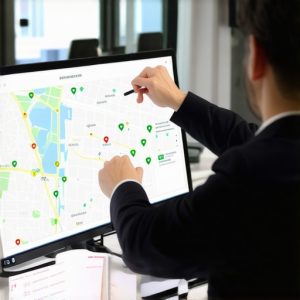
The Proximity Signal Change That’s Quietly Killing Local Foot Traffic
For years, the local search playbook was simple: optimize your business name, gather five-star reviews, and ensure your NAP (Name, Address, Phone number) was consistent across the web. If you did those things, you’d likely find yourself in the coveted “Map Pack.” But recently, a silent shift has occurred. Business owners who once dominated their local neighborhoods are waking up to find their rankings cratering and their foot traffic evaporating, despite having perfect reputations.
The culprit isn’t a lack of reviews or a sudden surge in competition. It is a fundamental shift in how Google calculates the “Proximity Signal.” While the 2021 “Vicinity Update” was the tremor that first signaled this change, the 2025-2026 algorithm landscape represents a total structural overhaul. We are no longer operating in an era of simple keyword matching. We are in the era of telemetry-based proximity.
With Google processing an estimated 9.5 million searches per minute according to Semrush data, the competition for local visibility has never been more intense. If your business is losing ground, it’s likely because you are still playing by 2021 rules in a 2026 world. To survive, you must understand how google business profile seo has evolved from static optimization to real-time signal management.
From Keywords to Telemetry: The 2025-2026 Shift
Historically, Google’s local algorithm relied heavily on “Relevance, Distance, and Prominence.” If someone searched for “Best Plumber + City,” Google looked for a profile that matched those keywords and was reasonably close to the user. However, the “Discovery Core February 2026 Update” has effectively demoted the weight of static keywords in favor of “Live Nodes” and “Sensor Data.”
Google has moved away from looking at where your business says it is, and toward where its telemetry data proves it is in relation to the user’s real-time movement. Proximity is no longer a static radius; it is a fluid, AI-calculated zone that shrinks and expands based on “Live Pings.” This means that even if you are the best-rated shop in town, if you aren’t emitting the right signals to Google’s neural network, you are effectively invisible to anyone more than a few blocks away.
This shift is part of a broader trend where Google’s AI models, specifically Gemini, are prioritizing “Quality of Experience” and “Verified Movement” over traditional SEO markers. To understand where this is heading, you should read our deep dive on Beyond the Map Pack: Local SEO Trends Defining 2026.
The 733% Surge: Why Your Organic Reach is Shrinking
The tightening of proximity signals isn’t happening in a vacuum; it is being driven by the aggressive commercialization of the Map Pack. Recent data from PPC Land highlights a staggering trend: Google’s local pack ads surged from less than 3% to 22% of tracked mobile keywords between November 2025 and January 2026. This represents a 733% increase in ad density in just three months.
As Google allocates more “above-the-fold” real estate to sponsored listings, the space for organic results has become a digital premium. To maintain a high organic google business profile ranking, your profile must now be hyper-relevant to the user’s exact micro-location. The “proximity filter” has become a defensive mechanism for Google; by tightening the radius for organic results, they force businesses with wider service areas into the “Pay-to-Play” ad model.
This is why you might rank #1 when standing in your own lobby, but drop to #15 when you walk to the coffee shop down the street. The algorithm is intentionally limiting your reach to favor paid placements, unless your “Telemetry Signal” is strong enough to override the filter.
Why Your 5-Star Reviews Aren’t Saving You
One of the most frustrating experiences for a modern business owner is maintaining a 4.9-star rating with hundreds of reviews, only to be outranked by a mediocre competitor with 10 reviews and a 3.5-star rating. This happens because of “AI-Pathing Signals” and “Neural Clusters.”
Google’s AI now analyzes user behavior data – specifically how users move through the physical world using Google Maps on their phones. If the algorithm sees that users frequently search for your business but then navigate to a competitor, or if users “bounce” from your location because of parking issues or long wait times (detected via dwell-time telemetry), your ranking will suffer regardless of your review count. Google is prioritizing the “Path of Least Resistance.”
If you find that your reputation isn’t translating into rankings, it may be time to look into a professional google maps ranking service to bridge the gap between your brand’s popularity and its technical visibility. Relying on reviews alone is a 2018 strategy; in 2026, you need to master “Semantic Signal Clashes” to ensure Google’s AI understands the value of your physical location.
5 Signs Your Business is Being “Shadowbanned” by Proximity Filters
Google doesn’t send you a notification when your proximity radius is throttled. Instead, you experience a “soft” disappearance. Here are five symptoms that your business is being filtered out:
- The “Office-Only” Rank: You rank in the top 3 when you are physically at your place of business, but your visibility drops off a cliff the moment you move 500 meters away.
- The “Ghost Pin” Phenomenon: Your business appears on the map when searched by name, but disappears entirely during “category” searches (e.g., “dentist near me”).
- Keyword Decoupling: You rank for your business name, but you have lost all rankings for high-intent service keywords you previously dominated.
- The “Competitor Leapfrog”: New, unoptimized businesses are suddenly appearing above you despite having zero local authority.
- Erratic Traffic Spikes: Your “insights” show massive fluctuations in “Discovery” searches that don’t correlate with your actual foot traffic.
These symptoms indicate that your business is trapped in a proximity loop. To understand the mechanics behind this, check out our guide on The Truth About Proximity Signals and Why Your Pin is Still Hidden.
Expert Fixes: Reclaiming Your Local Visibility
Reversing a proximity-based traffic drop requires more than just updating your business hours. You need to send active, “Live” signals to the algorithm. Here are the strategies currently being used by top-tier **local seo agency** professionals:
1. Pin Precision: The “Two-Inch” Fix
In the 2026 algorithm, the exact placement of your map pin relative to the “centroid” of your business cluster matters immensely. Moving a pin just a few meters to align with the primary entrance or a high-traffic pedestrian path can trigger an immediate visibility boost. This is why Map SEO Experts Are Moving Address Pins to Trigger Immediate Local Visibility; it’s about aligning with the “Neural Clusters” Google uses to group similar businesses.
2. Moving from Bio to Live Data
Standard business descriptions are static. Google’s AI now favors profiles that utilize “Live Data” – this includes frequent Google Updates (formerly Posts) that include geo-tagged images, real-time inventory updates, and “Beacon Signals.” Using professional local seo tools can help you automate these signals so your profile never looks “cold” to the AI sensors.
3. Beacon Signals and Geo-Fencing
The goal is to move from passive geo-fencing to active “live pings.” This involves encouraging customers to interact with your profile while they are physically at your location. Checking in, uploading photos in real-time, and using the “Ask a Question” feature while on-site all send telemetry data to Google that confirms your business is a high-value destination. This is one of the most effective 5 Local Ranking Team Fixes for 2026 Foot-Traffic Signal Drops.
The Role of AI and Gemini in 2026 Local Search
We cannot discuss **google maps seo** without mentioning Gemini. Google’s AI model is now responsible for summarizing your business for users. When a user asks, “Where should I get coffee nearby?”, Gemini doesn’t just look at rankings; it parses your reviews, your website content, and your “Semantic Signals” to provide a narrative answer.
If your website says you are a “luxury spa” but your Google Business Profile signals (and user telemetry) suggest you are a “quick-service massage clinic,” you create a “Semantic Signal Clash.” Gemini will de-prioritize your listing because it cannot confidently categorize your business. Fixing these clashes is essential for anyone looking to **rank higher on google maps** in an AI-driven environment. You must ensure your digital footprint is a cohesive, unified signal of intent and location. For more on this, see How to Fix the Proximity Signal That’s Hiding Your Shop From Nearby Searchers.
Conclusion: The Future of Local Dominance
The era of “set it and forget it” for Google Business Profiles is over. With over 5 trillion annual queries, Google’s priority is efficiency and monetization. The tightening of the proximity signal is a direct response to the need for hyper-accuracy in an AI-first world. If your foot traffic is dying, it’s a signal that your telemetry is weak.
To stay ahead, you need a proactive google business profile seo strategy that accounts for real-time data, AI summarization, and the shrinking organic Map Pack. Whether you are looking for a gmb ranking service or specialized google business profile optimization, the time to act is before the next core update further narrows your reach. The map is changing; make sure your business is still on it.